

1923 – Garrett A. Morgan’s Three‑Position Traffic Signal Patent Is Issued
A clever safety tweak landed Garrett A. Morgan a U.S. patent on November 20, 1923 for a manually operated three‑position traffic signal that added an all‑direction stop between Stop and Go. Filed in February 1922 and issued as Patent No. 1,475,024, Morgan’s device introduced an intermediate “caution” position to halt all traffic briefly — a concept aimed at preventing collisions while intersections cleared. The patent drawings and description show the mechanism and operator controls for the three distinct positions, reflecting early practical thinking about traffic control at a time when urban motor traffic was rapidly increasing. This patent captured a simple procedural innovation that anticipated later standardized signal phasing.
1945 – TELCO Receives Certificate to Begin Business in India
On November 20, 1945 the Registrar issued the certificate of commencement of business to Tata Locomotive and Engineering Company, allowing the newly incorporated firm to start operations in Bombay. TELCO had been incorporated two months earlier, on September 1, 1945, specifically to produce locomotives and boilers; the November certificate formalized its legal ability to carry out that work. Company records and a reproduced certificate in Tata’s archival materials show the document dated “Twentieth day of November one thousand nine hundred and forty‑five,” the milestone that turned incorporation paperwork into a functioning industrial enterprise in postwar India.
1953 – Kaiser Halts Henry J Production; Final Cars Roll Off Line
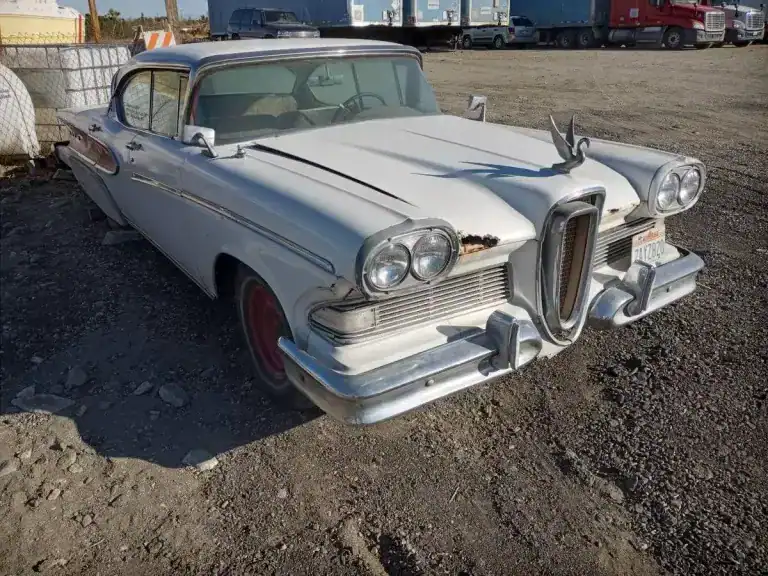
Kaiser ended the principal production run of its compact Henry J on November 20, 1953, when the final 1953 cars came off the assembly line. The decision left most 1954‑model Henry Js as carryovers rather than a fresh production run; only 1,119 cars were built for 1954. The affordable compact had struggled against larger American tastes and limited dealer enthusiasm, and its late‑1953 shutdown signals how difficult it was for independent low‑cost models to sustain volume in the era. The November 20 stoppage closed the book on the Henry J’s main manufacturing life.
2011 – Sergio Scaglietti, Shaper of Ferraris, Dies in Modena
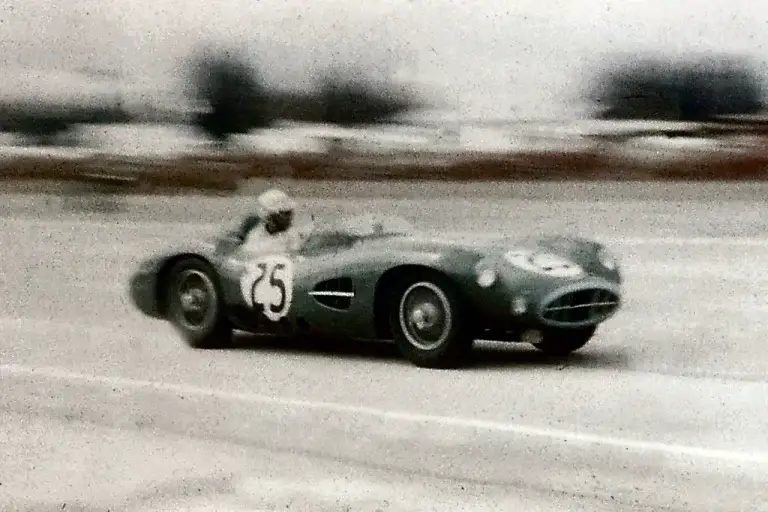
Sergio Scaglietti died in Modena on November 20, 2011 at the age of 91, closing the life of the coachbuilder whose aluminum bodies gave 1950s and ’60s Ferraris much of their character. Scaglietti’s firm hand‑shaped lightweight coachwork for models such as the 250 Testa Rossa and various competition berlinettas, often working directly with Enzo Ferrari and the marque’s racing teams to translate aerodynamic and structural needs into shimmering aluminum panels. Colleagues and obituaries noted his insistence on handcraft and on creating forms that were both light and race‑worthy, a combination that made Scaglietti’s shop indispensable to Ferrari’s sporting image.
2017 – Mahindra Opens Auburn Hills Manufacturing Facility and North American HQ
Mahindra Automotive North America cut the ribbon on a new Auburn Hills headquarters and manufacturing facility on November 20, 2017, announcing that the Metro Detroit site would produce off‑highway vehicles and serve as the company’s North American base. Local and national coverage of the opening noted plans to add roughly 105–250 jobs and characterized the plant as Mahindra’s foothold for expanded U.S. operations in both off‑road and light‑vehicle ambitions. Company and state economic development materials emphasized the facility as a strategic production and engineering presence in southeast Michigan.

Leave a Reply
You must be logged in to post a comment.
Create an account to comment